Tooth Extraction Recovery Day by Day: A Complete Timeline
Written & Researched By
Editorial Team · product research desk
Sources: ADA guidelines, Mayo Clinic, PubMed, peer-reviewed dental literature
Published: September 14, 2026
Affiliate Disclosure: This article contains affiliate links. If you purchase through our links, we may earn a small commission at no extra cost to you. This supports the editorial desk. See our full disclosure and How We Make Money.
Short answer: Public aftercare calendars usually print a simple-extraction fade by about day 3 to 5, with a 48-hour peak and a day-3 “should be easing” check. Wisdom-tooth staging is a longer four-socket clock. Follow your written card if it differs.
JawPainAfterToothExtraction is an editorial desk. We compile published dental guidance, manufacturer specs, and community consensus. We do not run an in-house lab or a test fleet, and we do not claim we personally treated patients. This page is a simple-extraction calendar plus a peak-then-improve card — not a diagnosis page and not a “recovery-timeline kit.”
Listing check: Confirm this is a simple-extraction calendar plus a peak-then-improve card, not a wisdom mill. A cold compress is first-48-hour exterior cold — not a sealed “recovery-timeline kit.”
Four-socket / surgical clock: Wisdom Teeth Recovery Timeline Day by Day. Worsening-after-day-3 vs infection-neighbor: Infection After Tooth Extraction: 8 Signs. Consult questions before the chair: 20 Questions to Ask Your Dentist Before a Tooth Extraction. Repair-layer biology (not this calendar): Granulation Tissue After Tooth Extraction. Hub: What to Expect.
Before you buy a “recovery-timeline kit” (desk checklist)
- This page vs the wisdom twin. Four sockets, IV-sedation ride, and a longer stiffness column live on wisdom teeth recovery timeline day by day. This card is the simple / single-site calendar. Do not treat them as one mill.
- This page vs the comfort-routine hub. Packing and product-first first-days live on Day-by-Day Comfort Routine Checklist. This card is the published day markers, not a second kit list.
- Cold compress vs sealed kit: a jaw cold compress is first-48-hour exterior cold if the sheet named ice. Confirm wrap straps, not a migraine mask. Buying criteria: Best Ice Packs for Jaw Pain. Hub: Pain Relief.
- Pain-duration and swelling-duration are already published. Ache fade: How Long Does Jaw Pain Last. Cheek volume: How Long Does Swelling Last. Growing after day 3: When to Worry About Swelling. This calendar will not restock those mills.
- Research price: a jaw wrap often sits around $10–$20; a washcloth and stacked pillows are $0 extra. Those are research bands, not a live quote.
Simple-Extraction Calendar (Research Snapshot)
Windows below are research bands from public oral-surgery aftercare (AAOMS / ADA clinic-sheet neighbors, Mayo consumer pages). This desk did not time sockets. Your written card wins.
Day 0: extraction day
Those sheets describe a fresh socket under gauze and a local-anesthetic fade commonly printed at about 2 to 4 hours. A clot is the first cover they want left in place.
Desk logistics (not a protocol): bite on the gauze they sent for the printed sit; cloth-wrapped exterior cold in short on/off sits; stay on the written pain card before the block is fully gone if that is what they printed; cool, soft plates; skip rinse, spit, straw, and smoke. Straw sibling: When Can I Use a Straw After Tooth Extraction?.
Day 1: first full day
Public cards usually print rising ache and puff as the inflammatory column, not as a reversal. The clot is still organizing.
Soft, cool plates and room-temperature cups: 7-Day Soft Food Meal Plan. Hub: Soft Foods.
Day 2: peak swelling / peak discomfort
AAOMS-neighbor language commonly files the 24-to-48-hour window as the loudest cheek and the stiffest jaw. That peak is the printed high — not a promise every face looks the same.
If your sheet opened a gentle salt-water window, let the rinse flow; do not swish. Rinse types (not a new bottle here): Best Oral Rinses After Extraction. Hub: Oral Care.
Day 3: peak-then-improve check
This is the first “should be easing” day those calendars name. Granulation (soft repair tissue) is the biology neighbor: granulation tissue after tooth extraction.
Call flag, not a cart: pain that climbs on day 3 instead of easing is the combo those sheets file next to dry socket signs or the infection-signs card. Do not wait for a kit to ship.
If your card switches off cold after about 48 hours, a warm moist cloth on the outside of the jaw is the pantry habit. Ice-then-warm lives on the jaw-pain duration page — not a second wrap mill here.
Days 4–5: noticeable quiet for a simple site
Many simple-extraction sheets describe desk work and light chew as reasonable in this window if the site is trending down. Still skip directing hard crumbs into the hole.
Texture ladder: When Can I Eat Solid Food After Tooth Extraction?.
Days 5–7: surface quiet, deeper work continues
Those pages often print a about-day-7 look. Brush everywhere except the hole until they open that window: When Can I Brush My Teeth After Tooth Extraction?.
Days 7–14: wisdom-tooth extension (not this calendar)
Surgical / four-socket stiffness that lingers into week two is the wisdom timeline column. This page will not restock that mill.
Weeks 3–4 and months 3–6
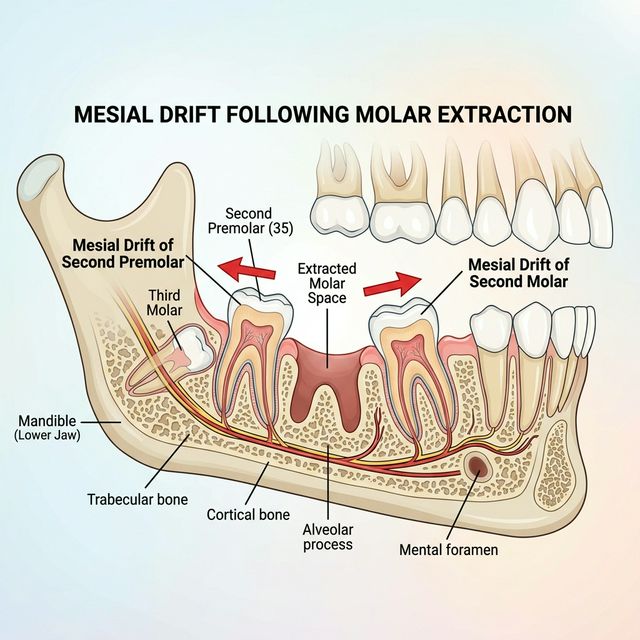
Soft-tissue quiet is commonly printed around 3 to 4 weeks. Bone fill is a months-long remodeling note on those sheets — usually without a daily symptom. Socket fill is not neighboring teeth moving: teeth shifting after tooth extraction. Visual stages: Tooth Extraction Healing Stages.
What Those Sheets Say Can Stretch the Calendar
- Smoking / inhale — 72-hour suction wait: smoking after extraction
- Lost clot — dry socket signs
- Infection-neighbor pattern — infection signs
- Age, diabetes, or immune notes — their history, not a blog forecast
- Skipped protein / fluids — pantry plates, not a meal-kit SKU
Quick Reference (Research Bands, Not a Promise)
| Day | Pain language those pages often print | Swelling | Diet language | Desk habit |
|---|---|---|---|---|
| Day 0 | Moderate, still masked by the block | Starting | Liquids + very soft | Protect the clot |
| Day 1 | Moderate to high | Increasing | Soft, cool | Cold + written meds |
| Day 2 | High (peak) | Peak | Soft only | Passive rinse if cleared |
| Day 3 | Should ease | Should ease | Soft + a little more variety | Watch for reversal |
| Days 4–5 | Mild | Mostly down | Soft + light chew | Desk work if they said so |
| Days 5–7 | Minimal | Quiet | Near-normal, skip sharp crumbs | Printed follow-up |
| Days 7–14 | Wisdom column | Quiet | Normal if they opened it | Use the wisdom twin |
When to Skip DIY and Call
A 48-hour peak is the printed high. These patterns are an office (or ER) question — not a wrap:
- Pain that gets worse after day 3 instead of fading
- Fever at the number on your card lasting more than about 24 hours
- Swelling that increases after day 3 — when to worry
- Pus, a persistent foul smell, or yellow/green discharge
- Trouble swallowing or breathing — emergency-department language. Do not wait for a cold compress.
Do not wait for a “recovery-timeline kit” to ship.
Tagged Amazon cards (confirm the live titles)
| Listing | Research price band | What to confirm before you click |
|---|---|---|
| Jaw cold compress | About $10–$20 (research) | Live title is a hands-free jaw/face wrap for first-48-hour exterior cold — not a migraine mask, not a sealed “recovery-timeline kit” |
| Tagged jaw-wrap search | Research band varies | Use this if the live DP title drifted to a migraine mask or a sealed kit |
Desk shortlist (not a socket trial): If a bag of frozen peas and a washcloth already cover the first 48 hours, skip the cart. We did not time calendars on patients. A cold compress is exterior cold. Warm cloth is pantry after the printed switch. If the live title is a “recovery-timeline kit,” stay on the simple-extraction calendar.
When to skip DIY: Skip diagnosing dry socket from a selfie. Skip packing paste. Skip waiting for a wrap to ship if day 3 is louder instead of quieter — call.
Frequently Asked Questions
How long does a simple extraction take to feel better?
Those calendars commonly print a 3-to-5-day fade, loudest in the first 48 hours. Your card wins.
Is this the wisdom-tooth clock?
No. Four-socket staging is Wisdom Teeth Recovery Timeline Day by Day.
Do I need a recovery-timeline kit?
Usually no. Written meds, pantry plates, and an optional gel wrap if you want hands-free exterior cold. A sealed kit is a skip.
Key Takeaway
A simple-extraction calendar is a peak-then-improve card. Confirm a cold compress vs a migraine mask vs a sealed kit before you click. Call if day 3 is louder instead of quieter.
Related Reading
- Wisdom Teeth Recovery Timeline Day by Day
- Infection After Tooth Extraction: 8 Signs & What to Do
- 20 Questions to Ask Your Dentist Before a Tooth Extraction
- Granulation Tissue After Tooth Extraction
- What to Expect
- How Long Does Jaw Pain Last After Tooth Extraction?
- Day-by-Day Comfort Routine Checklist
Written and researched by the JawPainAfterToothExtraction Editorial Team. Sources: ADA guidelines, AAOMS, Mayo Clinic, peer-reviewed dental literature. We are an editorial desk, not a dental clinic.
Sources: American Association of Oral and Maxillofacial Surgeons; American Dental Association; Journal of Oral and Maxillofacial Surgery.