When Can I Use a Straw After Tooth Extraction? Timeline and Risks
Written & Researched By
Editorial Team · product research desk
Sources: ADA guidelines, Mayo Clinic, PubMed, peer-reviewed dental literature
Published: September 12, 2026
Affiliate Disclosure: This article contains affiliate links. If you purchase through our links, we may earn a small commission at no extra cost to you. This supports the editorial desk. See our full disclosure and How We Make Money.
Short answer: Aftercare pages usually ask you to wait at least 5 to 7 days before using a straw. They name straw suction as a clot-disruption habit — the same family of habits as smoking draws and forceful spitting. That is recovery-care framing from public sheets, not a guarantee that one sip “causes dry socket” or that day 7 is unlocked for every socket.
JawPainAfterToothExtraction is an editorial desk. We compile published dental guidance, manufacturer specs, and community consensus. We do not run an in-house lab or a test fleet, and we do not claim we personally treated patients. This page is a suction-avoidance drink-methods note — sip-from-cup, spoon, squeeze-to-push — not a blender shopping guide and not a straw-diameter review.
Listing check: Confirm this is a suction-avoidance drink-methods page (sip-from-cup / spoon / squeeze-to-push), not a blender shopping list. A sip-lid personal cup you drink from the rim is a different card from a straw-lid water bottle. All straw diameters still create suction. The NutriBullet-style ASIN below is a kitchen tool with a sip-lid — not a straw-lid travel bottle and not a “dry-socket kit.”
Texture timing is When Can I Eat Solid Food After Tooth Extraction?. Lid types on motors are Best Blenders for Soft Food. Four-socket menus: Best Foods After Wisdom Teeth Removal. Hub: What to Expect. Overnight water-cup logistics: How to Sleep After Tooth Extraction.
Before you click a bottle (desk checklist)
- Do you already have a wide cup and a spoon? If yes, skip a purchase. Smoothies can be a bowl.
- Sip-lid vs straw-lid: a personal-blender cup you drink from the rim is the aftercare-friendly lid. A straw-lid water bottle recreates the suction those sheets warn about.
- Squeeze-to-push vs suck-through: a sports bottle you squeeze so liquid pours into the mouth is a method. A straw, sippy valve, or built-in tube is still suction.
- Diameter does not unlock day 2: thin plastic, boba, silicone sippy, metal reusable — aftercare notes treat all of them as suction.
- Research price: a sip-lid personal cup often sits in the $30–$70 blender band; a plain wide glass is $0 if you already own one. Those are research bands, not a live quote.
Why Aftercare Sheets Talk About Suction
The issue those pages name is mechanical: negative pressure.
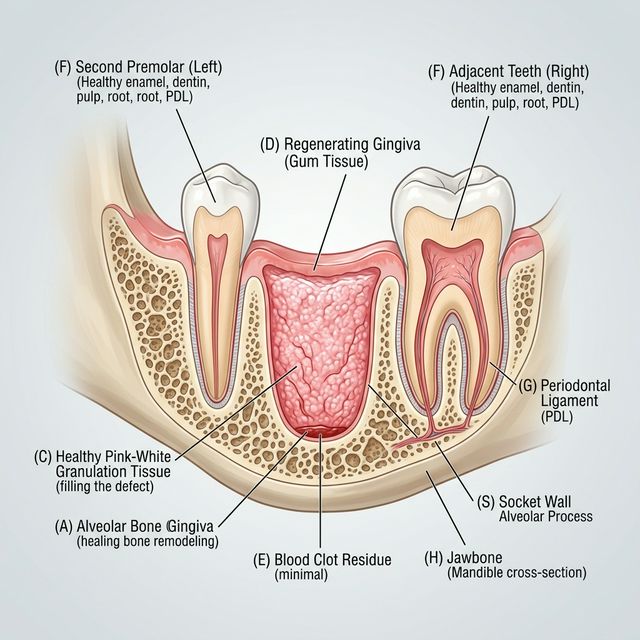
When you drink through a straw, cheeks pull inward and air rushes through the tube. Aftercare notes say that same pull can act on a fresh clot. The clot is the biological bandage those sheets want you to leave alone during the first days, when it is still described as soft.
This desk will not claim a straw “always” empties a socket. We will repeat the habit those pages print: skip suction until your office says the window is over. Phone-call signs if pain reverses after day 2 are on dry socket symptoms and dry socket signs & prevention.
How Those Sheets Describe the Sequence
Public dry-socket explainers often sketch this order when suction is the habit they are warning about:
- Days 1–3: Clot forming and still described as fragile
- Suction event: Straw, smoke draw, or forceful spit
- Days 2–5: Pain that gets louder instead of quieter — a reason to call, not a selfie diagnosis
- Office visit: Dressing, if that is what the dentist decides
Using a straw on day 2 and feeling fine that afternoon is not a clearance. Those pages describe delayed worsening. That is why this desk stays on methods, not on “you are safe at 72 hours.”
The Straw Timeline After Extraction
Research bands from public aftercare pages. Your written card wins.
Days 0–3: No straws
Highest-friction window in those sheets. Clot described as least reinforced. Any suction — straws, smoking, aggressive rinsing, forceful spitting — is on the skip list.
Days 3–5: Still no straws on most cards
Granulation tissue is the word those pages use for the next layer. Risk language is “decreasing,” not “cleared.” Most dentists keep the no-straw line through this window.
Days 5–7: Conservative printed recommendation
Many sheets give a green light around day 5–7 for simple extractions. That is a research band, not a promise your socket is sealed.
Day 7+: Often described as generally okay for simple sites
Simple-extraction notes usually treat straw use as a later-week habit. Wisdom-teeth notes often extend to 7–10 days, especially after surgical removal.
Wisdom teeth: extend if the office said so
Larger wounds, more sites. Four-socket food notes are on Best Foods After Wisdom Teeth Removal.
Straw Types Do Not Change the Physics
Patients ask whether a “safer straw” exists. Aftercare notes treat the material as beside the point.
Thin straws (standard plastic/paper)
Narrow diameter means more effort to pull liquid. Highest-effort suction of the group.
Wide straws (boba / smoothie)
Less effort per sip, same negative-pressure family.
Silicone sippy straws
Same suction dynamics. Material does not rewrite the habit.
No straw is “cleared” during the restriction window
During the first 5–7 days (or whatever your card printed), skip them all.
Suction-Avoidance Drink Methods
These are methods, not SKUs:
Sip from the cup directly. Tilt and let liquid flow. Think “pouring in,” not “sucking in.”
Use a spoon. Thick smoothies and protein shakes that do not pour well are a bowl.
Wide-mouth cup or glass. Easier to sip without pursing tightly (pursed lips are a mild suction habit on some sheets).
Squeeze-to-push bottle. Sports bottles you squeeze so liquid flows out — not ones you suck through a valve. Gently squeeze and let it pour. If you have to draw, it is still a straw.
Snipped pouch. For a thick smoothie, a small cut in the corner of a zip bag lets you pour. Odd-looking. Zero suction.
Lid shopping, if you actually need a new cup, belongs on the blender guide — confirm sip-lid, not straw-lid.
Other Habits Those Sheets File Next to Straws
| Activity | How aftercare pages usually rank suction | Typical printed wait |
|---|---|---|
| Drinking through straws | High | 5–7 days |
| Smoking/vaping (inhaling) | High | 72 hours minimum, 7 days often printed |
| Forceful spitting | Medium-high | 24–48 hours |
| Aggressive rinsing/swishing | Medium | 24 hours, then gentle flow only |
| Playing wind instruments | Medium | 7–10 days |
| Inflating balloons | Medium | 5–7 days |
| Narrow water-bottle openings you have to suck | Low-medium | Be cautious 3–5 days |
Passive spit after brushing (let paste fall out) is on When Can I Brush My Teeth After Tooth Extraction?.
Smoothies and Shakes Without a Straw
Nutritious cups are still on the menu. Change the delivery:
- Thin the blend so it pours from a glass
- Smoothie bowl + spoon
- Wide glass, gentle tilt
- No seeds or chunks that can lodge in a socket
Texture lists: best soft foods. Ladder timing: when can I eat solid food.
If You Already Used a Straw
One sip is not a diagnosis. Aftercare pages describe increased risk language, not a guaranteed empty socket.
After an accidental straw:
- Stop using it
- Do not poke the socket with your tongue to “check”
- Skip other suction habits for the rest of the day
- Watch the next 2–3 days for the phone-call pattern those sheets name:
- Pain that suddenly gets louder after day 2–3
- A socket that looks empty (visible bone instead of a dark clot) — still an office question, not a selfie label
- Bad taste or odor
- Pain radiating to ear, temple, or eye
If that pattern shows up, call. Comparison language: dry socket vs. normal healing.
Special Situations
Multiple extractions
The restriction applies to every site. More sockets means more places suction could matter. Keep the full printed window.
Extractions with bone grafts
Many surgeons extend no-straw to 7–10 days. Graft material is described as even easier to disturb than a clot. Full notes: bone graft after tooth extraction.
Blood thinners
If you take a blood-thinning medicine, ask the office for your straw window. Do not invent a shorter one from a blog table.
Tagged Amazon cards (confirm the live titles)
| Listing | Research price band | What to confirm before you click |
|---|---|---|
| NutriBullet-style personal cup | About $30–$70 (research) | Live title is a sip-lid cup you drink from the rim — not a straw-lid water bottle, not a dry-socket kit |
Desk shortlist (not a suction trial): If you already own a wide glass, skip the cart. We did not measure oral pressure on patients. A squeeze-to-push bottle is a method you may already own. If the live title is a straw-lid travel flask or a sealed “extraction drink kit,” stay on the cup you have.
When to skip DIY: Skip “safer straw” shopping. Skip clove packing paste. Skip waiting for a sip-lid blender to ship if you already have a mug. If pain reverses after day 2, call. Overnight, keep water on the nightstand as a cup — sleep-station logistics.
Frequently Asked Questions
Can I drink a milkshake without a straw after extraction?
Aftercare notes usually say yes: wide cup or spoon. The restriction is the delivery method, not the shake — as long as there are no hard mix-ins and your sheet allows dairy.
Will using a straw on day 5 cause dry socket?
Those pages describe lower risk at day 5 than at day 2, not zero. Many dentists still print day 7. If you use one on day 5 and pain gets louder afterward, call. Do not self-label.
Why do some dentists say 24 hours and others say 7 days?
The 24-hour line shows up on some older sheets. Current public guidance more often prints 5–7 days. Follow your dentist — they know the site.
Can I use a reusable straw placed far from the extraction site?
Aftercare notes treat negative pressure as mouth-wide, not tip-local. Distance does not rewrite the habit.
Are sippy cups safe after extraction?
Spill-proof valves require suction. An open cup is the usual recommendation. For a child, a free-flow (non-valve) cup is the form factor those pediatric notes prefer — still an office question.
Key Takeaway
Suction-avoidance is a drink method, not a shopping list. Sip from a cup, spoon a thick shake, squeeze-to-push if you already own that bottle. Confirm sip-lid vs straw-lid before you click. Call if the pain curve reverses after day 2.
Related Reading
- When Can I Eat Solid Food After Tooth Extraction?
- How to Sleep After Tooth Extraction
- When Can I Brush My Teeth After Tooth Extraction?
- Best Foods to Eat After Wisdom Teeth Removal
- What to Expect
- Dry Socket: Signs, Prevention
- Best Blenders for Soft Food
Written and researched by the JawPainAfterToothExtraction Editorial Team. Sources: ADA guidelines, Mayo Clinic, peer-reviewed dental literature. We are an editorial desk, not a dental clinic.
Sources: American Dental Association; Journal of Oral and Maxillofacial Surgery; International Journal of Dentistry.