Dry Socket vs. Normal Healing: How to Tell the Difference
Written & Researched By
Editorial Team · product research desk
Sources: ADA guidelines, Mayo Clinic, PubMed, peer-reviewed dental literature
Published: June 12, 2026
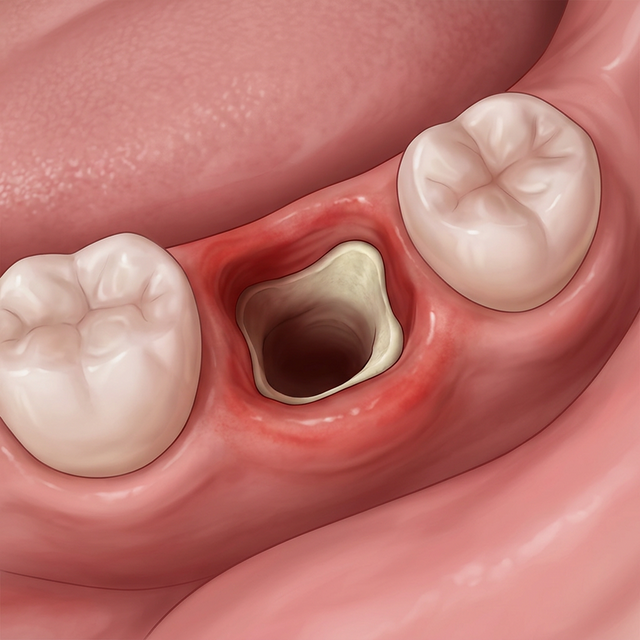
Short Answer: Normal healing follows a predictable path where discomfort peaks within the first 24 to 48 hours and steadily improves each day. Dry socket, or alveolar osteitis, is characterized by a sudden, severe escalation of pain that typically begins between days 3 and 5 post-extraction, often radiating to the ear or temple, accompanied by a visibly empty socket showing white bone instead of a dark red blood clot.
Undergoing a tooth extraction—whether it is a routine procedure or the removal of impacted wisdom teeth—can be a source of significant anxiety. In the days following surgery, every new twinge, ache, or change in the socket can lead to a common question: Is this normal healing, or am I developing dry socket?
Distinguishing between standard post-operative discomfort and a healing complication like dry socket (alveolar osteitis) is crucial. Knowing what to look for allows you to manage normal recovery with peace of mind or seek prompt dental intervention when necessary. This guide is the longer timeline writeup: visual cues, pain pattern, side-by-side comparison, and what changes across the first week. The shorter symptom list is Dry Socket Symptoms. Prevention and when-to-call notes are in Dry Socket: Signs, Prevention.
Understanding the Healing Process: The Normal Timeline
To identify when something is wrong, it is first necessary to understand what healthy healing looks like. When a tooth is removed, the body immediately begins a complex tissue repair process. This process can be divided into distinct stages over the first week.
Day 1: Clot Formation and Initial Coagulation
Within the first few hours after the extraction, a blood clot forms in the empty socket. This blood clot is the foundation of your recovery. It acts as a natural bandage, sealing the exposed bone and nerve endings from the oral environment (air, food, saliva, and bacteria).
- Appearance: The socket should contain a dark red, gelatinous blood clot that completely or mostly fills the hole.
- Pain Level: Moderate to high dull ache once the local anesthetic wears off. Some minor oozing of blood is normal.
- Management: Controlled effectively with prescribed or over-the-counter (OTC) pain relievers (such as ibuprofen or acetaminophen) and bite-down gauze pressure.
Days 2–3: The Transition and Granulation Tissue
By the second and third days, the blood clot begins to stabilize. The body starts replacing the clot with granulation tissue, which is rich in tiny blood vessels, collagen, and cells that build new tissue.
- Appearance: The dark red color of the clot may start to fade, transition to a lighter pink, or even develop a whitish-gray surface layer. This whitish layer is often mistaken for pus or food debris, but it is actually a healthy mesh of fibrin and granulation tissue.
- Pain Level: Pain should peak on day 2 and begin a steady downward trend by day 3. Swelling also peaks during this window and should begin to subside.
- Management: Pain should remain manageable with standard OTC medications.
Days 4–5: Soft Tissue Closure
During this phase, the gums (epithelial tissue) begin to grow over the socket, slowly closing the gap.
- Appearance: The socket opening becomes visibly smaller. The surrounding gum tissue looks less red and swollen, shifting to a healthy pink.
- Pain Level: Minimal. You may feel a mild, localized ache or soreness, but you should not require constant pain medication.
- Management: Gentle warm salt-water rinses help keep the area clean as oral hygiene routines return to normal (avoiding direct brushing of the wound).
Days 6–7 and Beyond: Near-Complete Surface Healing
By the end of the first week, the socket surface is largely sealed by new gum tissue, although the deep bone structure beneath will continue to remodel for several months.
- Appearance: The socket is mostly closed, and the indentation is shallow.
- Pain Level: Little to no spontaneous pain. Mild tenderness is only felt if the area is directly pressed or irritated by hard foods.
What is Dry Socket? (Alveolar Osteitis)
Dry socket is the most common complication following a tooth extraction, occurring in approximately 2% to 5% of all dental extractions, and up to 30% of impacted lower wisdom tooth removals. For prevention steps and office treatment, see our dry socket signs and prevention guide.
Clinically known as alveolar osteitis, dry socket occurs when the protective blood clot fails to form, dislodges, or dissolves prematurely before the underlying bone and nerve endings are covered by new tissue. This leaves the alveolar bone walls exposed directly to the mouth. The exposure leads to localized bone inflammation (osteitis) and intense pain due to the concentration of sensitive nerve endings in the jawbone.
The Mechanical and Chemical Causes of Clot Loss
The loss of the blood clot is typically driven by one of three mechanisms:
- Mechanical Dislodgement: Negative pressure in the mouth (created by sucking through a straw, spitting forcefully, or smoking) physically pulls the clot out of the socket.
- Chemical Dissolution: Certain substances in the bloodstream or saliva break down the clot. For example, estrogen (from oral contraceptives) and chemical compounds in tobacco smoke can trigger premature clot breakdown.
- Bacterial Activity: High levels of bacteria in the mouth due to pre-existing periodontal disease or poor post-operative hygiene can destroy the clot through enzymatic action.
The Key Indicator: Timeline of Pain Onset (Day 3–5)
If you are trying to determine whether you have dry socket, the most reliable clinical sign is the timing of the pain. Symptom-by-symptom detail is also in our dry socket symptoms guide.
gantt
    title Tooth Extraction Pain Trajectory (2026)
    dateFormat  X
    axisFormat %d

    section Normal Healing
    Peak Discomfort (Day 1-2)  :active, 0, 2
    Steady Improvement (Day 3-7) : 2, 7

    section Dry Socket
    Manageable Pain (Day 1-2)    :active, 0, 2
    Sudden Pain Spike (Day 3-5)  :crit, 2, 5
Severe Radiating Pain (Day 5+) :crit, 5, 7- Normal Healing Pain: Follows a downward slope. It is worst on Day 1 and Day 2, and then feels noticeably better each subsequent morning.
- Dry Socket Pain: Follows a rebound or “u-shape” pattern. The pain may improve on Day 2, but then suddenly intensifies between Day 3 and Day 5.
If you are on the fourth day after your extraction and find yourself suddenly needing stronger pain medication than you did on the second day, this is a classic indicator of dry socket.
Physical Appearance of the Socket: Visual Comparison
Looking inside your mouth with a flashlight and mirror can provide valuable clues, though it can be difficult to see clearly.
What a Normal Healing Socket Looks Like
A healthy healing socket undergoes several visual changes. In the first 24 hours, it looks like a dark red plug. Between days 2 and 5, it is common to see a whitish, grayish, or yellowish coating. Do not panic if you see this. This is not pus; it is fibrin, a protein that helps blood clot, and granulation tissue. A closer look at that coating is in white tissue at the extraction site.
- Clot presence: The socket is filled, not empty.
- Tissue color: Shifting from dark red to healthy pinkish-white.
- No bone visible: The walls and bottom of the socket are fully covered.
What a Dry Socket Looks Like
A dry socket looks dark and hollow. Because the clot is gone, you are looking directly into the empty bony socket.
- Empty appearance: The socket looks like a “dry” hole or empty crater.
- Visible bone: You may see whitish or beige bone structure at the bottom or sides of the socket.
- Debris accumulation: Food particles may collect in the open hole, sometimes appearing as dark or grey debris.
Comparing Pain Characteristics
The type of pain associated with dry socket is distinct from the soreness of normal healing.
| Pain Attribute | Normal Healing | Dry Socket |
|---|---|---|
| Intensity | Mild to moderate; gradually decreasing. | Severe, excruciating, and progressively worsening. |
| Quality | Dull, throbbing, or aching; localized soreness. | Sharp, intense, throbbing, deep bone pain. |
| Location | Confined strictly to the extraction site and immediate adjacent teeth. | Radiates outward along the jawline, up to the ear, temple, eye, or neck on the affected side. |
| OTC Response | Readily controlled with standard doses of ibuprofen or acetaminophen. | Unresponsive to standard over-the-counter pain medications. |
| Nighttime Impact | Easily managed, allowing for restful sleep. | Keeps the patient awake or wakes them up, despite pain medication. |
Other Systemic and Oral Symptoms
In addition to pain and appearance, several secondary symptoms can help you distinguish between these two states:
- Taste and Odor: A dry socket often produces a persistent, unpleasant metallic or rotten taste in the mouth, accompanied by foul breath (halitosis). This is caused by the decomposition of the remaining clot fragments and the accumulation of food debris and bacteria in the exposed socket. Normal healing may have a faint blood taste on the first day, but this quickly disappears.
- Fever and Swelling: It is important to know that dry socket rarely causes a fever or increased facial swelling. If you experience a fever (above 101°F / 38.3°C), worsening facial swelling, or pus draining from the socket, you are likely dealing with a post-operative infection rather than a simple dry socket. An infection requires immediate antibiotics, whereas dry socket is treated locally.
Side-by-Side Comparison: Normal Healing vs. Dry Socket
Use this quick reference table to evaluate your symptoms:
| Diagnostic Feature | Normal Healing | Dry Socket |
|---|---|---|
| Primary Pain Timeline | Peaks on Days 1–2, decreases daily. | Suddenly spikes on Days 3–5. |
| Visual Appearance | Dark red clot turning pink/white. | Empty dark hole; white bone visible. |
| Odor & Taste | None after Day 1. | Persistent bad breath and foul taste. |
| Pain Radiation | None; localized to socket. | Spreads to ear, temple, neck, or eye. |
| Response to Ibuprofen | High; pain is controlled. | Low; pain persists despite maximum dosage. |
| Fever | Absent (low-grade is possible on Day 1 only). | Absent. |
| Facial Swelling | Peaks on Day 2–3, then goes down. | None, or does not increase after Day 3. |
| Treatment Required | None; self-care only. | Dental visit for medicated packing. |
When to Call Your Dentist
While dry socket is not a medical emergency and does not cause long-term complications like bone infections (osteomyelitis) if left untreated, you should not try to “tough it out.” The pain is severe, and attempting to manage it at home can lead to accidental medication overuse. If you need same-day care, how to find an emergency dentist for dry socket walks through the call sequence.
Call your dentist or oral surgeon if:
- Your pain increases significantly on or after the third day post-surgery.
- Your pain is not controlled by the maximum recommended dose of over-the-counter pain relievers.
- You look in the mirror and see a completely empty socket with exposed bone.
- You experience radiating pain to your ear or temple.
- You develop symptoms of an infection, such as a fever, chills, or difficulty swallowing.
When It Is Not Dry Socket, but Still Needs Attention
A sharp edge of bone poking through the gum is usually a bone fragment (bone spicule), not dry socket. It is uncomfortable, but it is typically treatable with a quick office visit rather than medicated packing. For what these sharp edges are and how they are handled, see our bone spicules after tooth extraction guide. And remember the day-2 rule of thumb: pain that is worse on day 2 but still controlled by medication and improving by day 3 is standard healing, not dry socket.
What to Expect at the Dentist’s Office
If you are diagnosed with dry socket, your dentist can provide rapid relief. The treatment is straightforward and usually takes less than 15 minutes:
- Irrigation: The dentist will gently flush the socket with warm saline or an antiseptic rinse to clear out food debris, bacteria, and necrotic tissue.
- Medicated Dressing: The dentist will pack the socket with a specialized paste or medicated gauze strip. This dressing typically contains eugenol (clove oil), which has natural analgesic (pain-relieving) and antiseptic properties.
- Rapid Relief: The medicated dressing acts directly on the exposed nerve endings. Most patients experience a dramatic reduction in pain within 20 to 30 minutes of application.
- Follow-up Care: Depending on the dressing used, you may need to return to the office every 2 to 3 days to have the dressing changed until the socket begins to heal and the pain subsides (usually within 7 to 10 days). Some modern dressings are self-dissolving and do not require removal.
Prevention and Self-Care After Tooth Extraction
To protect your blood clot and minimize the risk of developing a dry socket, adhere strictly to these post-extraction guidelines:
- Avoid Suction (No Straws): Do not drink through a straw for at least 5 to 7 days. The suction force can easily dislodge the blood clot.
- Do Not Spit: Avoid spitting forcefully. Instead, let saliva or excess fluid gently drift out of your mouth into a sink or tissue.
- No Smoking or Tobacco Use: Do not smoke or use tobacco products for at least 72 hours (a full week is highly recommended). The mechanical act of inhaling creates suction, while the nicotine chemically restricts blood flow, delaying healing.
- Stick to Soft Foods: Eat soft, nutrient-dense foods like yogurt, applesauce, scrambled eggs, and mashed potatoes. Avoid hard, crunchy, spicy, or sticky foods that could lodge in the socket.
- Maintain Gentle Hygiene: Do not rinse your mouth vigorously during the first 24 hours. After the first day, rinse very gently with warm salt water (1/2 teaspoon of salt in a glass of warm water) after meals. An alcohol-free rinse such as CloSYS Gentle Mint rinse keeps the area clean after the first day without irritating the clot. More rinse options: best oral rinses for post-extraction healing.
- Limit Strenuous Activity: Rest for the first 24 to 48 hours. Physical exertion raises blood pressure, which can cause bleeding and dislodge the clot.
Frequently Asked Questions
Can dry socket heal on its own?
Yes, dry socket will eventually heal on its own as new tissue slowly covers the exposed bone. However, without professional treatment, this process can take 7 to 14 days of severe, unnecessary pain. Visiting your dentist for a medicated dressing provides immediate pain relief and supports a smoother recovery.
Can you get dry socket after Day 5?
It is extremely rare to develop dry socket after Day 5. By this time, the blood clot has stabilized, and granulation tissue has covered the exposed bone. If you experience a sudden onset of severe pain after Day 5, it is more likely due to an infection, food debris trapped in the socket, or damage to adjacent teeth.
Does a dry socket always require antibiotics?
No, dry socket is not an infection, so antibiotics are not standard treatment. It is an inflammation of the bone caused by the loss of the protective clot. Treatment focuses on local pain management, socket irrigation, and protective dressings. Antibiotics are only prescribed if there are clear signs of systemic infection, such as a fever or pus.
How common is dry socket, and who is most at risk?
Dry socket occurs in roughly 2% to 5% of extractions. You are at higher risk if you smoke, take oral contraceptives, have a history of dry socket, do not follow aftercare instructions, or undergo a complex extraction (such as removing lower impacted wisdom teeth).
What does the beginning of dry socket feel like?
It usually starts as a dull, persistent ache that gradually worsens over several hours on the third or fourth day. Unlike normal recovery pain, which responds to ibuprofen, this pain continues to intensify and begins to radiate toward the side of your face and ear.
Key Takeaways
- The Trend is Key: Normal healing pain decreases daily after Day 2. Dry socket pain suddenly spikes between Days 3 and 5.
- Look for Clot Loss: A healing socket has a visible dark red or light pink coating. Dry socket appears as a dark, empty hole, sometimes showing white bone.
- Radiating Pain: Dry socket pain is severe and radiates to the ear, temple, or neck, and it does not respond well to over-the-counter medication.
- Seek Care Promptly: If you suspect dry socket, contact your dentist. A quick office visit for medicated packing can relieve the pain in minutes.
Medical Disclaimer: The information provided in this article is for educational and informational purposes only. It is not intended to be a substitute for professional dental advice, diagnosis, or treatment. Always seek the advice of your dentist, oral surgeon, or other qualified healthcare provider with any questions you may have regarding a medical or dental condition. Never disregard professional advice or delay seeking it because of something you have read on this website.
Written and researched by the editorial team. Sources: American Dental Association (ADA) guidelines, Mayo Clinic Clinical Reviews, and the American Association of Oral and Maxillofacial Surgeons (AAOMS).