How to Prepare for a Tooth Extraction: Checklist
Written & Researched By
Editorial Team · product research desk
Sources: ADA guidelines, Mayo Clinic, PubMed, peer-reviewed dental literature
Published: September 12, 2026
Affiliate Disclosure: This article contains affiliate links. If you purchase through our links, we may earn a small commission at no extra cost to you. This supports the editorial desk. See our full disclosure and How We Make Money.
JawPainAfterToothExtraction is an editorial desk. We compile published dental guidance, manufacturer specs, and community consensus. We do not run an in-house lab or a test fleet, and we do not claim we personally treated patients. This is a logistics timeline — 1 week / 3 days / night before / morning of — not a last-minute Amazon “extraction recovery kit” and not a medical protocol we invented.
Listing check: Confirm three different cards: wedge loft (about 7–10 inches), a reusable gel ice wrap, and a sip-lid personal blender. Amazon “extraction recovery kit” parent pages mix a sealed gauze box with those three. The wrap ASIN is a freezer wrap, not a squeeze-to-activate instant pack for the car.
Most of the stress around an extraction is not knowing what to stage, then scrambling the night before. People who report a calmer first night usually staged the station days ahead. Hub context for the first days at home is on What to Expect.
The later “what about the gap?” question is in teeth shifting after tooth extraction. Food staging is the grocery list plus the 7-day soft food meal plan.
Before you order anything (desk checklist)
- Did the office already send a supply list? Use that first. This page is a packing timeline, not a substitute for their bag.
- Three cards, three jobs: elevation, exterior cold, and a sip-lid cup. Do not buy a sealed “recovery kit” and assume it includes all three — that ASIN family is reused as an ice wrap on other pages.
- Ride and fasting beat gadgets. A wedge you cannot get home to use is wasted. Confirm the driver and the nothing-by-mouth window first.
- WFH vs time off: if you must sit at a laptop, stage the work-from-home desk now. Day 0 is still a rest day on most aftercare sheets.
- Research price: a single-piece wedge often sits around $30–$50; a gel wrap in the low-to-mid teens; a personal blender $30–$70. Those are research bands, not a live quote.
1 Week Before: Medical & Logistical Planning
Talk to Your Dentist About Your Medications
This is the most important pre-extraction office step and the one people most often skip. If you take any of the following, your dentist and physician may need to coordinate before your procedure:
- Blood thinners (warfarin, aspirin, clopidogrel, rivaroxaban) — bleeding questions belong to the prescriber
- Bisphosphonates (for osteoporosis) — a jaw-healing question for the office, not a DIY stop
- Immunosuppressants — infection-risk questions for the office
- Oral contraceptives — some aftercare pages note a dry-socket association; ask, do not self-adjust
Never stop blood-thinning medication on your own. Always coordinate with both your prescribing physician and your dentist together.
Clear Your Schedule
Plan for at least 2 to 3 full rest days after a simple extraction, or 4 to 5 days after a surgical extraction (like wisdom teeth), unless your office wrote a different window. Swelling and discomfort often peak at 24–48 hours, so powering through a full in-office day on day one is a comfort problem.
If you work from home, let your team know you may be slower and will likely skip video for a few days. Camera-off notes are in the WFH setup guide.
Order Your Recovery Supplies
These take time to arrive. Order now if you do not already own them:
| Item | Why aftercare lists keep naming it |
|---|---|
| Wedge pillow | Single-piece incline aftercare pages cite for head-above-heart nights — confirm loft, not a travel U-pillow. Type comparison: Best Recovery Pillows. |
| Gel ice wrap (face coverage) | Hands-free exterior cold for the first 48 hours if your sheet wants that routine — confirm wrap straps, not a migraine mask. Buying criteria: Best Ice Packs for Jaw Pain. |
| Ultra-soft toothbrush | Compact head for later brushing around the site when the office says you may. Guide: Best Soft Toothbrushes. |
| Personal blender | Sip-lid cup for smoothies and puréed soup. Confirm it is a kitchen tool, not a food kit. |
3 Days Before: Stocking Up & Food Prep
Grocery Shopping
Your diet is shifting to soft foods for several days. Stock up now so you are not walking a supermarket on peak-swelling day. The aisle-by-aisle list is the pre-extraction grocery list:
Essentials to buy:
- Greek yogurt, cottage cheese, applesauce pouches, pudding cups
- Bananas, avocados, ripe berries (for blending)
- Sweet potatoes and regular potatoes (for mashing)
- Eggs, protein powder, silken tofu
- Broth (chicken or vegetable) for puréed soups
- Table salt (for rinses if the office named that habit)
Meal Prep Ahead of Time
Cooking while sore or on medication is extra work you can skip. Get this done now; the day-by-day menu is the 7-day soft food meal plan:
- Make freezer smoothie packs: Pre-portion banana, yogurt, protein powder, and berries into zip-lock bags. Recovery day: dump a bag into the blender.
- Batch-cook puréed soup: Make 3–4 servings of butternut squash or another soup your sheet allows. Freeze in single-serving microwave-safe containers.
- Pre-mash potatoes: A batch lasts several days in the fridge and reheats in minutes.
Arrange Your Ride Home
You will not be able to drive yourself home if you are receiving IV sedation or general anesthesia. Arrange the ride now, not the morning of.
Fill Prescriptions Early
Ask whether the office can send pain-medication and antibiotic prescriptions in advance so you can fill them before extraction day. The worst logistics miss is getting home and realizing the pharmacy run is still ahead of you as numbness fades. Dosing belongs to the written bottles — this page does not invent a schedule.
The Night Before: Station Setup & Sleep Prep
Build Your Recovery Station
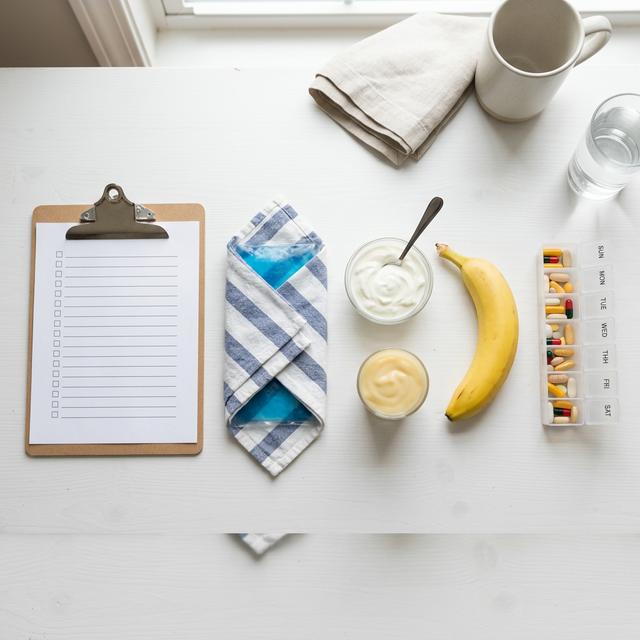
You will not want to hunt around the house on extraction day. Set up everything within arm’s reach at the bedside or desk:
- Pain medication (already filled) plus the written dosing card
- A phone timer for the interval your bottle names
- Lip balm — mouth-breathing dries lips
- Tissues and a small mirror
- Water bottle (no straw)
- Gauze squares (usually in the aftercare bag; extras if the office said so)
A daytime twin of this station is the work-from-home desk. Overnight positions are in Sleep Positions for Jaw Pain Relief.
Prepare Your Bed
- Set up your wedge pillow, or stack 2–3 regular pillows so you can sleep on your back with your head improved
- Place a dark-colored towel over your pillowcase — some blood-tinged drool on night 1 is commonly described on aftercare sheets
Freeze Your Ice Packs
A reusable gel wrap needs freezer time. Place it in the freezer tonight if that is the card you bought. Instant chemical packs are a different form factor — they belong in a bag, not as a substitute for the wrap you just ordered.
Practice Jaw Relaxation
Aftercare pages often repeat “lips together, teeth apart”: relax the jaw and let the teeth separate slightly. People who clench tend to notice more stiffness later. This is a comfort habit, not a lockjaw treatment.
The Day of Your Appointment
Follow Fasting Instructions Exactly
If you are receiving IV sedation or general anesthesia, your oral surgeon will provide specific fasting instructions (often nothing to eat or drink for 6–8 hours prior). Follow those exactly — skipping them can cancel the appointment.
For local anesthesia only: you can typically eat a light meal beforehand. Confirm with your dentist.
What to Bring
- Your arranged driver
- Your filled prescriptions (in the original bottles)
- Your dental insurance card and photo ID
- A list of all current medications (for the intake form)
- A small bag with gauze, a non-straw water bottle, and a soft snack for after
What to Avoid Bringing
- Beverages with straws — suction is one of the clot-disruption habits aftercare pages warn about
- Anything that assumes you will drive yourself home
- Any strenuous plans for the afternoon or evening
Comfort-system notes for the first 48 hours live on Post-Extraction Pain Management.
Download the Printable Checklist
Here is your quick-reference summary to print or screenshot:
1 Week Before:
- Discuss medications with dentist and physician
- Arrange time off work (2–5 days, or whatever the office wrote)
- Order only what you do not own: wedge, ice wrap, extra-soft brush, sip-lid blender
3 Days Before:
- Grocery shop (soft foods list above)
- Prep freezer smoothie packs and puréed soups
- Fill prescriptions
- Arrange your ride home
Night Before:
- Build recovery station
- Place dark-colored towel on pillow
- Freeze ice packs
- Practice jaw relaxation
Morning of Appointment:
- Follow fasting instructions
- Pack your bag
- Confirm your driver
When to skip DIY: Skip a sealed Amazon “extraction recovery kit” that promises gauze, syringes, clove paste, and a rinse in one mystery box. Skip stopping a blood thinner because a carousel said so. If pain reverses after day 2, that is a phone call, not a better kit. Card-by-card comfort items are on Recovery Essentials.
The more you stage in advance, the less you have to invent on the days you would rather rest. Follow the office sheet when it disagrees with this timeline.
This article is for informational and recovery-planning purposes only. It is not medical advice, a diagnosis, or a treatment plan. Always follow the specific pre-procedure instructions provided by your dentist or oral surgeon.
Related Reading
- 7-Day Soft Food Meal Plan
- Working From Home During Dental Recovery
- Sleep Positions for Jaw Pain Relief After Tooth Extraction
- Post-Extraction Pain Management
- What to Expect
- Pre-Extraction Grocery List
- Recovery Essentials
Written and researched by the JawPainAfterToothExtraction Editorial Team. Sources: ADA guidelines, Mayo Clinic, peer-reviewed dental literature. We are an editorial desk, not a dental clinic.