Nerve Damage After Tooth Extraction: Numbness & Tingling
Written & Researched By
Editorial Team · product research desk
Sources: ADA guidelines, Mayo Clinic, PubMed, peer-reviewed dental literature
Published: March 31, 2026
Short answer: Numbness, tingling, or a “pins and needles” sensation in the lip, chin, or tongue after a lower wisdom tooth extraction is called paresthesia. It’s caused by temporary irritation or stretching of nearby nerves during surgery. Most cases resolve on their own within a few weeks to a few months. Permanent paresthesia is rare.
Waking up after lower wisdom tooth surgery with a numb lip or chin — or a strange tingling on the tongue — can be alarming if you weren’t warned about it beforehand. This guide explains what’s happening, what to expect, and when to seek follow-up care. If you are still in the first hours after the appointment, start with how long numbness lasts after extraction — that page covers anesthesia wear-off versus longer nerve involvement.
What Is Paresthesia?
Paresthesia is the medical term for abnormal sensation — numbness, tingling, a burning feeling, or hypersensitivity, in a specific area of the body. After lower molar extractions, it typically affects:
- The lower lip (one or both sides)
- The chin (particularly the skin below the lip)
- The tongue (usually one-sided)
- The gum tissue around the extraction site
The sensation can range from mild “dental anesthesia that hasn’t worn off” to complete numbness in the affected area.
Why Does It Happen?
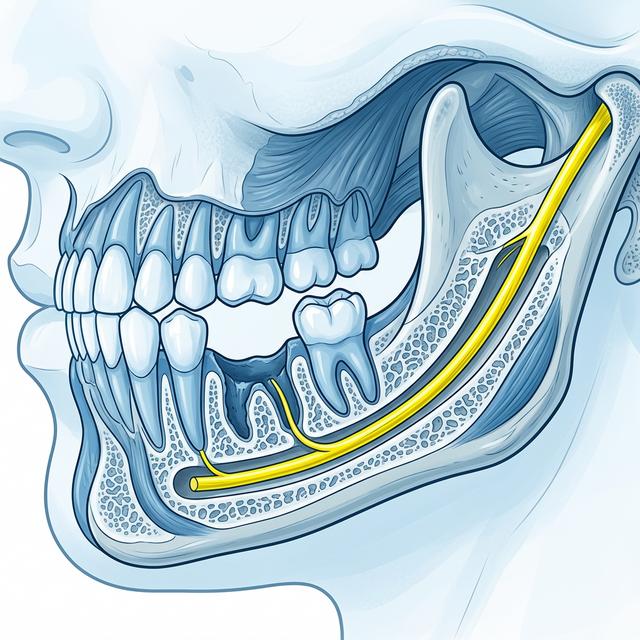
The lower back teeth, particularly the lower wisdom teeth, sit extremely close to two major nerve branches:
The Inferior Alveolar Nerve (IAN)
This nerve runs through the lower jawbone inside the inferior alveolar canal, branching off to supply sensation to the lower teeth, lower lip, and chin. Lower wisdom teeth roots frequently extend very close to, or occasionally in contact with, this canal.
During extraction, the nerve can be:
- Stretched by the pulling force needed to remove the tooth
- Compressed by retractors or instruments during surgery
- Bruised if the root tip was directly touching the nerve canal
- In rare cases, nicked if the anatomy was unusually close
The Lingual Nerve
This nerve runs along the inside of the lower jaw and supplies sensation to the tongue and floor of the mouth. It’s located just beneath the gum tissue on the tongue side of the lower molars, an area that’s part of the standard surgical field for lower wisdom tooth removal.
Tongue numbness or tingling after extraction indicates the lingual nerve was affected.
How Common Is It?
Temporary paresthesia after lower wisdom tooth extraction is more common than most patients expect. Studies in oral surgery journals cite rates ranging from 0.4% to 8% for temporary inferior alveolar nerve involvement, depending on the proximity of the root to the nerve canal (visible on CBCT or panoramic X-ray).
Permanent paresthesia, where sensation doesn’t fully return, occurs in roughly 0.01% to 0.9% of cases. It is genuinely rare, particularly when the surgery is performed by an experienced oral surgeon who reviewed preoperative imaging.
What Does It Feel Like?
Paresthesia after extraction typically presents as one or more of:
- Numbness, the area feels like it’s still anesthetized (“novocaine that won’t wear off”)
- Tingling or pins and needles, particularly when the nerve is recovering
- Burning sensation, less common, usually indicates nerve irritation rather than compression
- Hypersensitivity, light touch feels exaggerated or uncomfortable
- A combination that changes over weeks as the nerve heals
The sensations often shift as recovery progresses, numbness transitioning to tingling is generally a positive sign that nerve function is returning.
How Long Does Paresthesia Last?
Recovery timeline varies significantly based on the type and degree of nerve involvement:
| Type | Typical Recovery |
|---|---|
| Mild stretching or bruising | 2–8 weeks |
| Moderate compression | 2–6 months |
| Significant involvement | Up to 12–18 months |
| Permanent (very rare) | Does not resolve |
The most important predictor is what happens in the first 3 months. If sensation is returning, even partially, within this window, full or near-full recovery is the typical outcome. Sensation that hasn’t begun returning by 3–6 months warrants specialist evaluation.
What Can Help Recovery?
There are no proven treatments that significantly accelerate nerve healing after dental paresthesia. However, your dentist or oral surgeon may recommend:
- Observation and monitoring, tracking sensation changes at follow-up appointments
- Vitamin B12 supplementation, some evidence suggests B12 supports nerve repair, though evidence in this specific context is limited
- Avoiding trauma to the area, be careful with hot liquids or foods in numb areas, since you can burn yourself without feeling it
- Specialist referral, if there’s no improvement by 3 months, an oral and maxillofacial surgeon or neurologist may be consulted
Warm compresses, massage, and physiotherapy are sometimes suggested to stimulate the area, but evidence for their effectiveness in dental paresthesia is limited.
Important Safety Note for Numb Areas
You cannot feel pain or heat in a numb area. This creates a practical safety risk:
- Hot drinks and food, sip carefully; you may burn your lip or tongue without realizing it
- Biting, be careful chewing on the side where your lip is numb; patients occasionally bite their lip or cheek without noticing
- Shaving or grooming, nicks and cuts may not be felt around the chin
Take extra care with these activities until full sensation returns.
When to Follow Up
Contact your dentist or oral surgeon if:
- Numbness persists beyond 2 weeks with zero improvement, worth documenting early
- There’s no sensation improvement by 6–8 weeks, a follow-up appointment helps establish a baseline and rule out other causes
- You experience worsening pain or burning in the numb area, this may indicate a different nerve issue than simple paresthesia
- You accidentally injure yourself in the numb area without noticing
Your surgeon should have flagged nerve proximity before the procedure if it was visible on imaging. If this is the first you’re hearing about nerve risk, bring it up at your follow-up.
Does Paresthesia Mean the Surgery Went Wrong?
Not necessarily. Lower wisdom tooth roots frequently sit within 1–2 mm of the inferior alveolar nerve, there’s simply no safe route around this anatomy in some patients. An experienced oral surgeon will:
- Review the panoramic X-ray (or CBCT scan for high-risk cases) beforehand
- Discuss nerve proximity risk as part of informed consent
- Adjust technique (e.g., coronectomy, removing only the crown and leaving roots near the nerve) in extreme cases
If the nerve proximity was noted in your preoperative consultation, the paresthesia is a known risk of the procedure, not a surgical error.
Related Recovery Guides
- Wisdom Teeth Extraction: Recovery Guide, full recovery timeline for wisdom tooth surgery
- Upper Tooth Extraction and Sinus, nerve and sinus considerations for upper teeth
- How Long Does Jaw Pain Last After Extraction?, what to expect beyond the first week
- Tooth Extraction Recovery: Day by Day, your complete healing timeline
Key Takeaway
Numbness or tingling after lower wisdom tooth extraction is a recognized complication, not necessarily a sign that something went wrong. Most paresthesia cases resolve on their own within weeks to months as the nerve heals. The key indicators to watch: any return of sensation within the first 3 months is a positive sign. Protect numb areas from heat and accidental biting until sensation is fully restored. If there’s no improvement by 6–8 weeks, request a follow-up to monitor progress.
Written and researched by the editorial team. Sources: ADA guidelines, Mayo Clinic, peer-reviewed dental literature.
Sources: American Association of Oral and Maxillofacial Surgeons; Journal of Oral and Maxillofacial Surgery; American Dental Association.